

 Guidance
 for Private Pilots
The theory side of your licence, made simple: the nine exams, how to study for them, and how the official exams work.
- 9
- theory exams
- 75%
- pass mark
- 4
- attempts each
- 18
- months to pass
Student pilots
The requirements
Every private pilot's licence, national or EASA, has a theory requirement, and our courses cover it for all of them. In the UK the LAPL(A) and LAPL(H) are no longer issued: pilots train for an NPPL(A) or NPPL(H) instead, while the PART-FCL PPL(A) can still be trained for and issued.
Alongside your flying training, you'll study for and pass nine official theory exams, plus a practical (oral) radio test.
The nine exams
 Air Law & ATC ProceduresPPL010A
 Operational ProceduresPPL070A
 Aircraft General KnowledgePPL020A
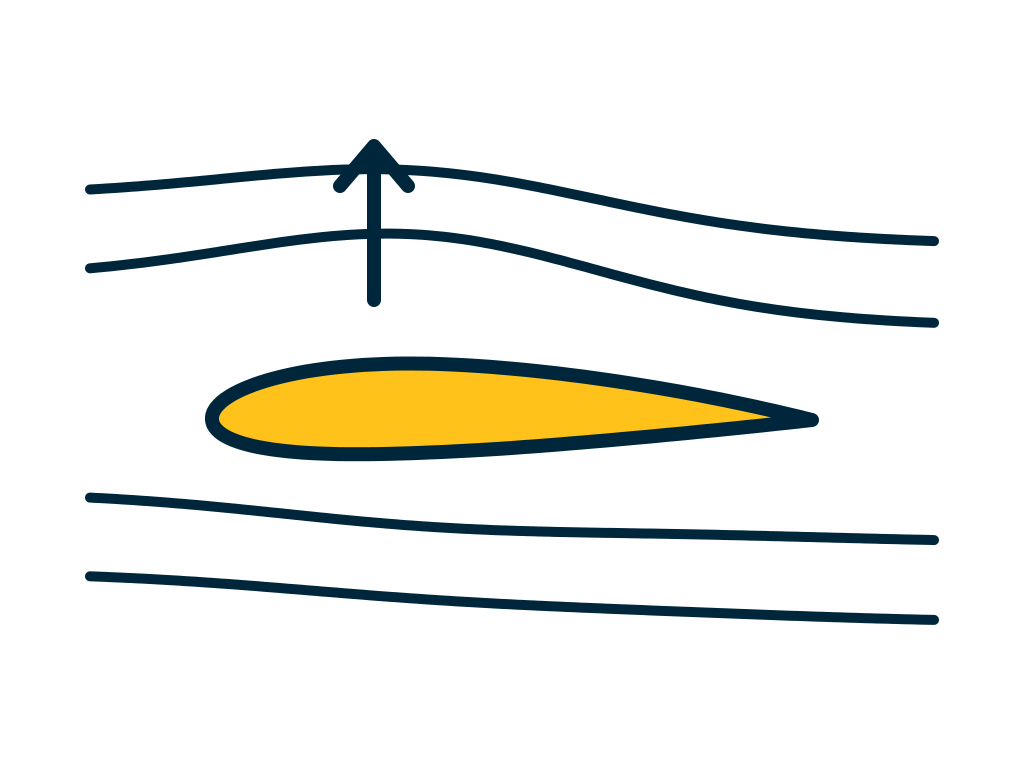 Principles of FlightPPL081
 Human Performance & LimitationsPPL040A
 MeteorologyPPL050A
 Communications (Radio Telephony)PPL090A
 NavigationPPL060A
 Flight Performance & PlanningPPL030A
The official exams
The rules, at a glance
- 75%
- Pass mark
- 4
- Attempts per subject
- 18
- Months to pass all nine
- 24
- Months your passes last
For every official exam, and for our own online exams too.
Fail one subject four times and every pass, in all subjects, is lost.
For the PART-FCL PPL(A), from the end of the month of your first attempt.
Counted from your last exam pass, once all nine are done.
Timescales for the PART-FCL PPL(A)
Pass all the exams within 18 months, counted from the end of the calendar month of your first attempt. For example:
- 1
2 June 2026
Your first exam
- 2
31 December 2027
Last day to pass all nine
- 3
24 months
Your passes stay valid from your last pass
Miss the 18 months and you enter a 3-month cooling-off period, all your passes become void, and the exams start again from the beginning.
Failures and resits
You have four attempts at each subject. Fail one four times and you'll need further training and a 3-month cooling-off period, and every pass in all subjects becomes void: the whole exam process starts again.
For the UK NPPL(A)
When you apply for your licence, every exam must have been passed within the previous 24 months. Any older pass needs to be taken again.
Where you sit them
Only at a location registered with the CAA, with an approved Ground Examiner as invigilator: usually your flight training organisation.
Student pilots
How to study
You can make life easy, or you can make it difficult. Some subjects need more learning than others, and some complement each other, so the order you take them in matters.
Taking all of that into account, we recommend the study order below, and our article on How to Study has expert advice on learning for the theory exams.
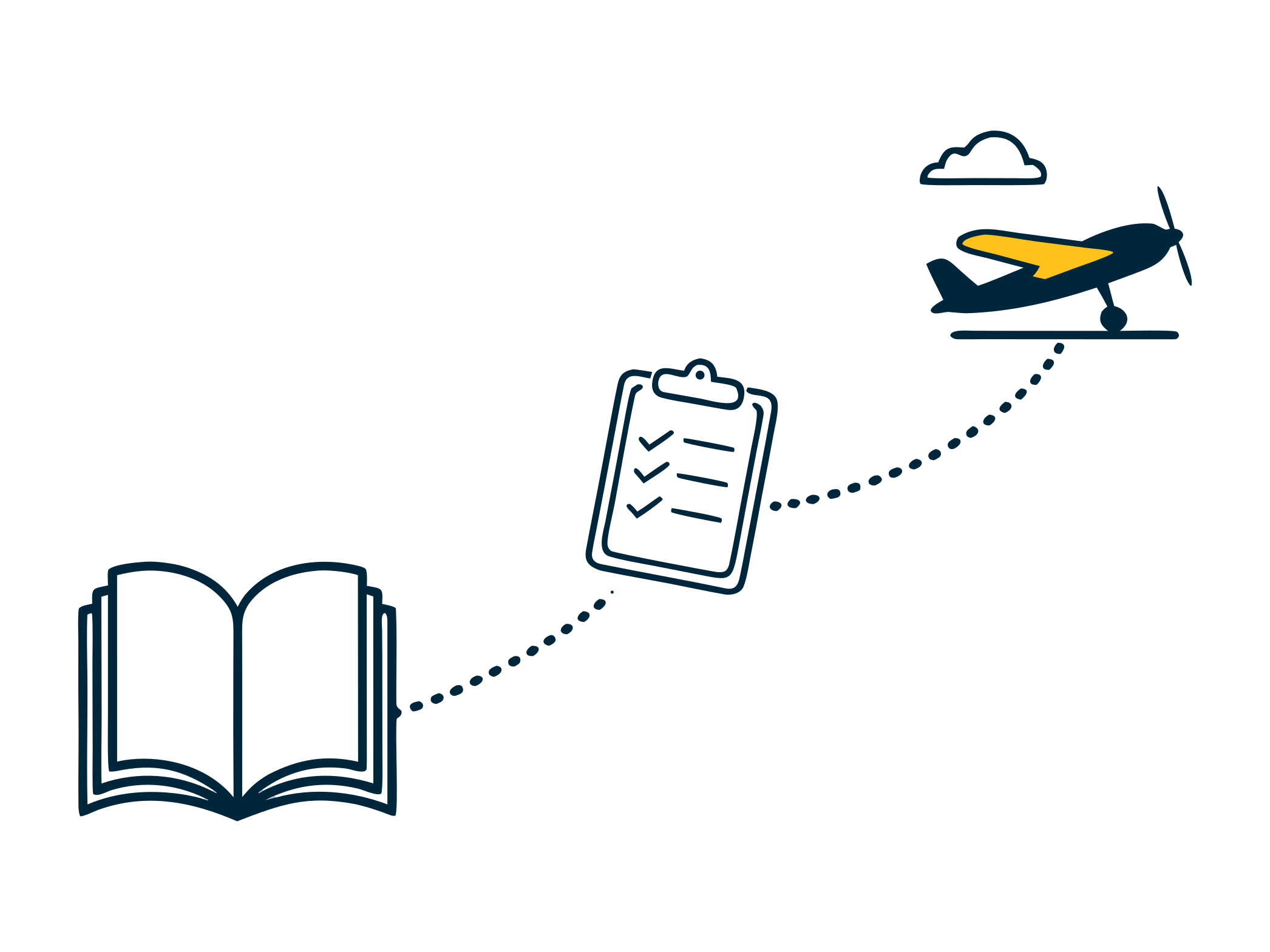
- 1Air Law & ATC Procedures
- 2Operational Procedures
- 3Aircraft General Knowledge
- 4Principles of Flight
- 5Human Performance & Limitations
- 6Meteorology
- 7Communications *
- 8Navigation
- 9Flight Performance & Planning
* Communications also has a practical (oral) exam with a Radiotelephony Examiner, which needs its own preparation. Examiners and students tell us how well our RT Practical Examination Preparation one-to-one course gets pilots ready for it.
Flight Training Video Lessons
Join a highly experienced instructor and examiner in the cockpit for every exercise in the PPL flight syllabus, with best practice, tips and advice along the way.
The official exams
Before your first exam
To sit an official exam you need an Exam Readiness Certificate, which you earn by passing our online exam for the course. Pass ours, and you stand every chance of passing theirs.
The CAA's exams are online, with over 1,000 new questions compared with the old written papers, so older study aids may well be out of date. We keep our course material and questions up to date with feedback from pilots taking the new exams.
Rule number one: don't panic.It's a lot easier than it sounds.
- 1
Register on the CAA Portal
Register as a student. You'll be asked for official photo ID, which can take the CAA up to 5 days to check. You only do this once.
- 2
Ask for the PPL e-Exams Service
Once registered, request access to the “Private Pilot Theoretical Knowledge e-Exams Service”, add the extra details it asks for, and choose your training organisation.
- 3
Sit it at your training organisation
The exam is online, but it has to be taken at a location registered with the CAA, with an approved Ground Examiner as invigilator: usually where you're learning to fly.
The official exams
Questions and time
Each subject has its own number of questions and time limit. If you know your subject, you won't be short of time. The pass mark is 75% for every one.
| Subject | Questions | Time | Time |
|---|---|---|---|
| Air Law & ATC Procedures | 16 | 35 min | 35 min |
| Operational Procedures | 12 | 30 min | 30 min |
| Aircraft General Knowledge | 16 | 35 min | 35 min |
| Principles of Flight | 12 | 35 min | 35 min |
| Human Performance & Limitations | 12 | 25 min | 25 min |
| Meteorology | 16 | 50 min | 50 min |
| Communications (Radio Telephony) | 12 | 20 min | 20 min |
| Navigation | 12 | 45 min | 45 min |
| Flight Performance & Planning | 12 | 45 min | 45 min |
On the day
Top tips for the official exams
- 1
Read the question carefully
Note in particular what it actually asks you to answer.
- 2
Read every answer
Before choosing: you need the most correct one, not the first that fits.
- 3
Leave the hard ones
If a question is difficult, move on and come back to it at the end.
- 4
Rule out the wrong ones
Unsure? Decide which answers are definitely wrong, and choose from what's left.
- 5
Know all of the subject
Fewer questions means each one is worth more, so you must answer more of them correctly to pass.
Licensed pilots
Your licence is only the first goal
Once you have it, keeping your knowledge of the rules, procedures and your skills up to date matters just as much. There are more ratings to earn, and courses we highly recommend for every licensed pilot.
Don't know where to start?
Let us help you!
Your short-cut to becoming a pilot.